 Auto Trader California
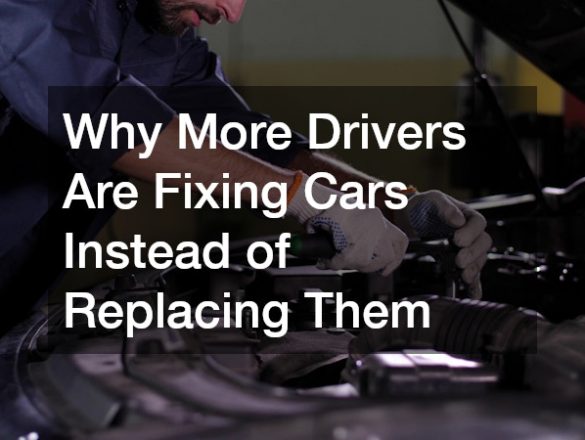
Rising vehicle prices and longer loan terms have made buying a new car feel out of reach for many households, and that shift is changing how people think about the vehicles they already own. Instead of trading in a car at the first sign of trouble, more drivers are asking their mechanic what it would take to fix it. This approach can save thousands of dollars, but it only pays off if you know which repairs are worth making and which signal it is time to move on. Understanding the real cost of common fixes versus a new purchase can help you make a smarter, less stressful decision.
The Rising Cost of New and Used Vehicles
New car prices have climbed well past pre-pandemic levels, with the average new vehicle now costing around $48,000 — a figure that would have covered a fully loaded luxury model just a few years ago. Even used vehicles with high mileage now carry price tags that would have seemed unreasonable a decade ago, as a 2015 sedan with 100,000 miles can still command $12,000 or more depending on the market. Limited inventory during and after the pandemic reset buyer expectations, and prices have stayed elevated even as production has normalized. Interest rates on auto loans have also increased, with average rates on new car loans rising from roughly 4% in 2021 to 7% or higher today. That difference means monthly payments stretch further into the future and cost more over the life of the loan, sometimes adding thousands of dollars in interest on a five- or six-year term. Longer loan terms, now commonly 72 or even 84 months, only compound the problem by keeping drivers financially tied to a depreciating asset for years longer than before. Rising insurance premiums add another layer of cost that many buyers overlook when comparing repair versus replacement. Newer vehicles often carry higher comprehensive and collision coverage costs due to expensive sensors, cameras, and lightweight materials used in modern repairs. For many drivers, the math simply does not favor an upgrade unless the current vehicle is truly beyond saving. A repair bill of $1,500 or even $2,500 often looks far more reasonable than trading into a new loan with higher payments, higher rates, and higher insurance costs stacked on top of each other.
With new car prices averaging over $48,000 and used cars still hovering above $25,000, many drivers simply can’t justify a replacement, even when repair costs run into the thousands. This financial pressure has pushed people to reconsider what counts as a dealbreaker. A car with a few mechanical issues that once might have been traded in is now viewed as a project worth investing in, especially if the vehicle is otherwise reliable and paid off. A $1,500 transmission repair looks a lot more reasonable when the alternative is a $500-plus monthly payment for the next five or six years. Owners are also weighing factors beyond the sticker price, like rising insurance premiums on newer vehicles, higher loan interest rates, and the depreciation hit that comes the moment a new car leaves the lot. When the math is laid out this way, sinking money into a known vehicle with a documented history often makes more financial sense than gambling on an unfamiliar one.
- Average new car prices have climbed past $48,000, outpacing wage growth and pricing many buyers out of the new car market entirely
- Higher interest rates add thousands to the total cost of financing a vehicle, with some buyers now paying $10,000+ more in interest over a typical loan term than they would have a few years ago
- Used car inventory shortages, stemming from pandemic-era production slowdowns, have kept resale prices elevated even as new car sales pick back up
- Longer loan terms — often 72 to 84 months — mean more people are still paying off cars they’d otherwise want to replace, leaving them “upside down” on their loans
- Rising insurance premiums on newer vehicles add another disincentive to trading up, especially for models with costly repair parts or advanced tech features
- Trade-in values have softened as used inventory slowly recovers, making it harder for owners to offset the cost of a new purchase
Everyday Wear That Drivers Now Choose to Repair
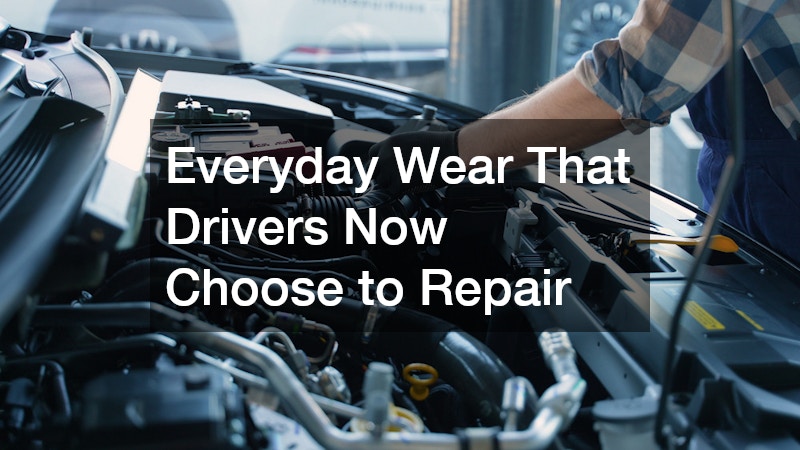
Many of the problems that once triggered a trade-in are actually routine wear items that a qualified shop can resolve in a single visit. Brake pads typically last 30,000 to 70,000 miles, belts and hoses often need attention around the 60,000-mile mark, and batteries rarely make it past four or five years, regardless of the vehicle’s make or model. These aren’t signs of a car falling apart; they’re predictable maintenance milestones that every vehicle reaches eventually. Suspension components like struts, shocks, and bushings follow a similar pattern, wearing gradually rather than failing without warning. A driver might notice a rougher ride or slight pulling to one side long before a part actually breaks, which gives plenty of opportunity for an affordable fix. Most of these repairs cost a few hundred dollars, a fraction of what a replacement vehicle or even a down payment would run. Addressing these issues as they come up, rather than treating them as red flags, keeps a car running safely for years longer than owners often expect. It also tends to be cheaper in the long run, since small wear items left unattended can accelerate damage to more expensive parts nearby. Worn brake pads, for instance, can eventually score rotors, turning a simple pad swap into a costlier rotor replacement if ignored too long.
A well-maintained vehicle with 120,000 miles can still have a lot of life left in it if the major systems—engine, transmission, suspension—are in good shape. That’s often just the midpoint for a modern car, especially with synthetic oils and improved metallurgy extending component life well past what older vehicles could handle. Worn brake pads, a failing alternator, or a cracked serpentine belt are routine wear items, not signs the vehicle is done. Drivers who stay ahead of small issues tend to avoid the kind of cascading failures that make a car feel unsalvageable. A timing belt replaced on schedule costs a few hundred dollars; one that snaps mid-drive can take a valve or piston with it, turning a $600 job into a $3,000 engine repair. The same logic applies to oil changes, coolant flushes, and catching a slow leak before it becomes a seized component. This proactive mindset is a big part of why repair shops are seeing more customers choose fixes over replacement. Mechanics report that drivers are increasingly asking for full diagnostic checks at every service visit, rather than waiting for a dashboard light to force the issue. That shift in behavior—treating maintenance as ongoing rather than reactive—is what keeps a car’s repair bills predictable instead of catastrophic.
- Worn brake pads and rotors typically cost $150–$400 to replace, a fraction of a new vehicle’s price tag
- Suspension bushings and struts affect ride quality and handling but rarely signal the car is done for
- Battery and alternator issues are common, easy to diagnose, and usually fixed within a day
- Timing belts, water pumps, and sensors also fall into this routine-fix category rather than “replace the car” territory
- Consistent auto repair on these components extends a vehicle’s usable life significantly, often well past 150,000 miles
Tires and Wheels That Take a Beating on the Road

Tire damage is one of the most common reasons drivers assume a vehicle is not worth keeping, especially when the damage looks severe. In reality, punctures, sidewall cuts, and tread separation can often be addressed without replacing the entire tire, depending on the location and extent of the damage. For pickup owners who put their vehicles through heavy work or off-road use, professional truck tire repair can restore safe handling and traction without the expense of a full tire replacement.
Knowing when a tire can be patched versus when it needs full replacement makes a real difference in your budget. A shop that inspects the tire carefully can tell you whether the damage is isolated to the tread or has compromised the internal structure, which affects safety on the road.
- Punctures within the tread area are often repairable if caught early
- Sidewall damage usually requires replacement due to safety concerns
- Uneven wear patterns may point to alignment issues rather than tire failure
- Regular rotation and pressure checks extend tire life and reduce emergency repairs
Cooling System Failures That Do Not Mean the End
An overheating engine is one of the most alarming problems a driver can experience, and it often leads people to assume the worst about their car’s future. In many cases, though, the issue traces back to a single failed component rather than a fundamentally broken engine. A cracked hose, a failing thermostat, or a leak in the radiator itself can usually be identified and corrected without major expense.
Ignoring these warning signs is what turns a manageable issue into a serious one, since prolonged overheating can damage the head gasket or warp the engine block. Getting timely radiator repair when a leak or clog first appears is far cheaper than dealing with the aftermath of a full engine failure. This is a good example of how a scary-looking problem often has a straightforward and affordable solution.
- Coolant leaks are often visible as puddles or stains under the front of the vehicle
- A failing thermostat can cause temperature swings even without a visible leak
- Corrosion inside the radiator reduces cooling efficiency over time
- Flushing the cooling system periodically helps prevent buildup and blockages
Signs Your Vehicle May Actually Need Replacement
Not every car is worth saving, and recognizing the difference is key to making a financially sound decision. When repair costs start to approach or exceed the vehicle’s market value, or when multiple major systems fail around the same time, replacement often becomes the more practical choice. A trustworthy shop will give you an honest assessment rather than pushing repairs that do not make sense.
Frequent breakdowns, transmission failure, or extensive rust damage to the frame are typically signals that a vehicle has reached the end of its practical lifespan. At that point, continuing to pour money into repairs can cost more over time than simply moving on to a different vehicle.
- Repair estimates exceeding 50 percent of the car’s value are a common warning sign
- Transmission or engine replacement costs often rival the price of a used vehicle
- Structural rust can compromise safety in ways that are not cost-effective to fix
- Recurring issues with the same system suggest a deeper, unresolved problem
Deciding whether to repair or replace a vehicle does not have to be a guessing game if you understand which problems are routine and which are genuine red flags. Getting a clear, honest inspection from a qualified shop is the best way to know where your car actually stands. In many cases, a targeted repair will keep you on the road reliably for years at a fraction of the cost of a new payment. Before you start shopping for a replacement, it is worth getting a second opinion on what it would really take to fix what you already own.