 Auto Trader California
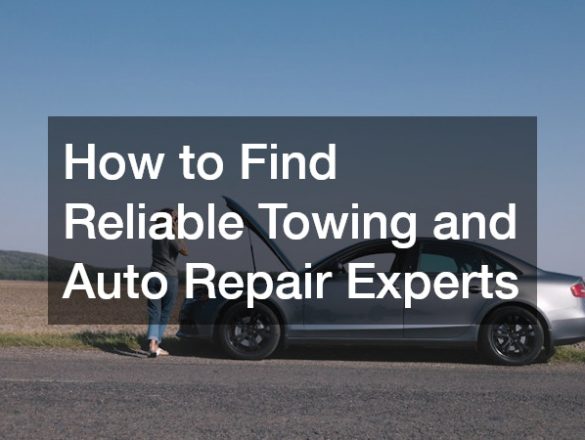
There is a distinct, sinking feeling that occurs the moment your vehicle loses power on a busy highway. The steering wheel becomes inexplicably heavy, the dashboard illuminates with ominous warning lights, and the ambient noise of passing traffic suddenly feels dangerously close. In this moment of vulnerability, adrenaline spikes, and rational decision-making is often replaced by a desperate need for an immediate solution. Unfortunately, the side of the road is the absolute worst place to blindly search for professional assistance. Making a rushed decision during a vehicular emergency frequently leads to a cascade of negative consequences, ranging from exorbitant price gouging and hidden administrative fees to catastrophic secondary damage inflicted upon your vehicle by untrained operators.
The core problem stems from a fundamental imbalance of power. When you are stranded, you are a captive audience. Predatory operators rely on your panic and lack of preparation to dictate terms that are heavily skewed in their favor. Furthermore, once your vehicle is unceremoniously dropped off at an unvetted mechanical facility, you may find yourself trapped in a cycle of subpar workmanship, unauthorized teardowns, and inflated parts pricing.
The only reliable method to avoid these costly pitfalls is proactive, meticulous research. By establishing a network of trusted professionals long before disaster strikes, you reclaim control of the situation. This comprehensive guide will systematically walk you through the precise steps required to vet, select, and build lasting relationships with trustworthy experts. You will learn how to decode complex pricing structures, demand the correct transport methodologies for your specific drivetrain, and identify the subtle hallmarks of mechanical excellence, ensuring that you are always prepared for the unexpected.
Match the Vehicle’s Problem to the Right Specialized Professional
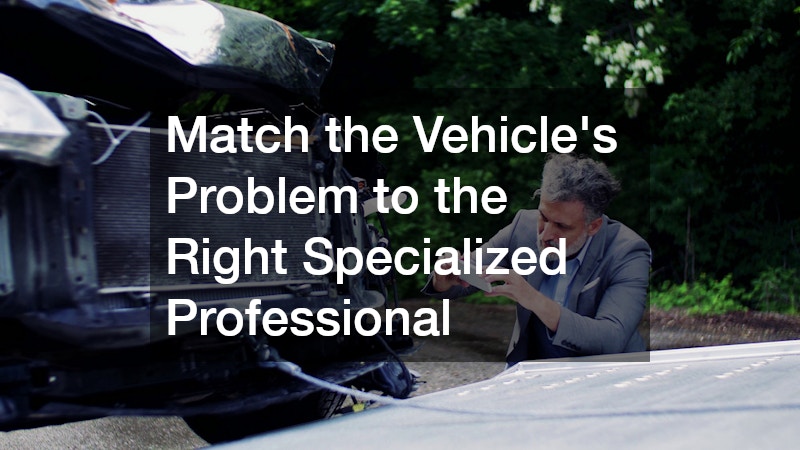
Before you make any phone calls, you must accurately assess the situation and the physical requirements of your vehicle. Sending the wrong type of equipment to an emergency scene not only wastes valuable time but can drastically increase the final bill.
Understand Your Vehicle’s Weight and Class
Every vehicle on the road has specific physical parameters that dictate how it can be legally and safely moved.
-
Locate the GVWR: Open the driver’s side door and locate the placard affixed to the door jamb. This sticker displays the Gross Vehicle Weight Rating (GVWR), which is the maximum operating weight of your vehicle.
-
Match the Equipment: Dispatchers need to know if they are recovering a 3,000-pound compact sedan or an 8,500-pound heavy-duty pickup loaded with cargo. Providing this information ensures they do not send a truck with a winch and chassis that are dangerously underpowered for the job.
-
Consider Dimensions: If your vehicle has a lengthened wheelbase, a lowered suspension, or a particularly wide track, these details must be communicated. Specialized ramps or low-angle beds might be required to prevent scraping the front fascia or undercarriage during loading.
Identify the Scope of the Emergency
A breakdown is not a monolithic event; it is a spectrum of failures. You must diagnose the broad category of the problem to request the correct type of intervention. For instance, if you have a dead battery, a minor tire puncture, or you have simply run out of fuel, you may only need roadside assistance rather than full transport. If the engine has seized, the suspension has collapsed, or the vehicle has been involved in a collision, you must request dedicated towing services capable of lifting and securing an immobilized asset. Misdiagnosing the issue can lead to a driver arriving with jumper cables when what you actually need is a flatbed, resulting in secondary dispatch fees.
Know When to Call for Standard Transport
Not every breakdown requires a massive, commercial-grade wrecker. If you are driving a standard commuter car, a crossover SUV, or a motorcycle, requesting light duty towing is usually the most appropriate and economical choice. This tier of transport utilizes smaller, more agile trucks that can easily navigate tight residential streets, low-clearance parking garages, and congested urban environments. Specifying this requirement prevents you from absorbing the operational costs of a massive heavy-duty wrecker that might be dispatched if you fail to clarify the size of your vehicle.
Inspect Certifications and Confirm Proper Transport Methods
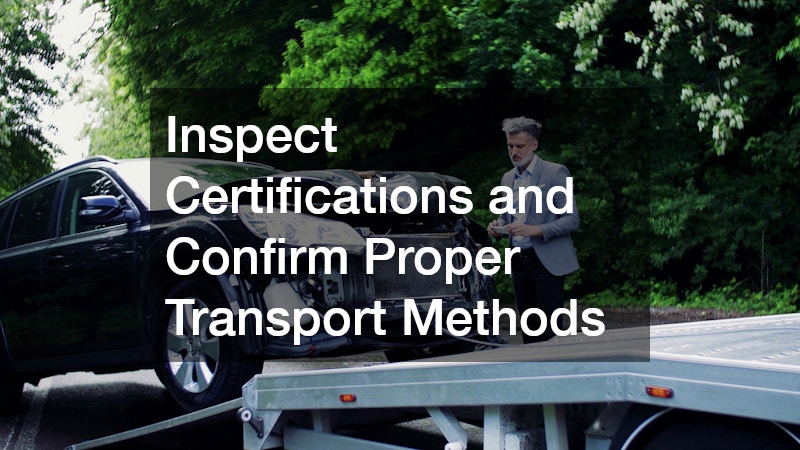
Once you understand what you need, you must critically evaluate the professionals offering to provide it. The roadside recovery industry is heavily regulated on paper, but enforcement varies drastically. It is entirely your responsibility to verify credentials before handing over your keys.
Demand Proof of Insurance and Licensing
Legitimate operators welcome questions about their credentials because they invest heavily in maintaining them. Fly-by-night operations will dodge these inquiries.
-
Department of Transportation (DOT) Numbers: In many jurisdictions, transport vehicles must display a valid DOT number on the side of the cab. You can verify this number through federal or state databases to ensure the business is legally registered.
-
Active Liability Insurance: Ask the dispatcher to confirm their liability and on-hook insurance limits. “On-hook” insurance specifically covers your vehicle while it is connected to or riding on their truck. If they drop your car while loading it, your personal auto insurance should not have to cover the damages.
-
Municipal Permits: Many cities require towing companies to hold specific municipal permits to operate within city limits, particularly if they are responding to police-initiated calls or accidents.
Protect Your Drivetrain
The method used to transport your vehicle can be the difference between a simple repair and a ruined transmission. This is especially critical for vehicles equipped with All-Wheel-Drive (AWD) or Four-Wheel-Drive (4WD) systems.
-
The Danger of Ground Contact: In an AWD vehicle, all four wheels are mechanically linked through a complex system of driveshafts, transfer cases, and center differentials.
-
Preventing Catastrophic Damage: Under no circumstances should you allow an operator to execute a flat tow where the vehicle’s drive wheels are left rolling freely on the pavement. Doing so will cause the internal components of the transmission to spin rapidly without adequate lubrication, rapidly building heat until the gears weld themselves together or shatter.
-
Demand a Flatbed: For any AWD, 4WD, or severely damaged vehicle, insist on a flatbed transporter where all four wheels rest entirely on the bed of the truck. If a flatbed is completely unavailable, the operator must use wheel dollies to elevate the rolling wheels off the pavement.
Check Online Reputation Intelligently
In the heat of the moment, you might instinctively rely on star ratings, but this requires nuance. People rarely leave a review when their car is hauled away successfully; they usually only write reviews when they are angry. Ignore the extreme one-star reviews that complain about being legally impounded for parking violations—these reflect the user’s error, not the company’s competence. Instead, look for reviews from stranded motorists. Scan the text for keywords related to driver professionalism, careful handling of the vehicle, and adherence to quoted wait times. Consistent patterns in these areas are highly indicative of the company’s true operational standards.
Ask the Right Questions to Avoid Hidden Fees and Delays
The financial aspect of roadside recovery is notoriously opaque. Without asking pointed, specific questions, you may find yourself subjected to a bill that is exponentially higher than anticipated. Establishing clear terms over the phone is your primary defense against predatory pricing.
Decode the Pricing Structure
When you call a dispatcher, never accept a vague estimate like “It should be around a hundred bucks.” You need a granular breakdown of their tariff sheet.
-
The Hook-Up Fee: This is the baseline charge simply to dispatch the truck and connect your vehicle to it. It is a flat rate regardless of how far you are going.
-
The Per-Mile Rate: Ask exactly how much they charge for every mile driven once the vehicle is loaded. Furthermore, ask when the mileage counter begins. Does it start from the breakdown site, or do they charge “portal-to-portal” (from the moment their truck leaves their lot)?
-
Hidden Surcharges: Explicitly ask if there are additional fees for after-hours service, holiday dispatch, or inclement weather. Ask if there are “winching fees” if your car is stuck in a ditch and needs to be pulled onto the pavement before being loaded. A reputable towing company will disclose all potential surcharges upfront without hesitation.
Establish a Firm ETA
Time is critical when you are stranded, especially in adverse weather conditions or on dangerous highways. Unfortunately, dispatchers are sometimes incentivized to secure your business by promising an unrealistic arrival time.
-
Challenge the Estimate: If a dispatcher promises a truck in fifteen minutes, ask for the truck’s current location. Cross-reference that location with your GPS map. If the drive time alone is thirty minutes without traffic, you know they are not being truthful.
-
Demand Updates: Ask for the driver’s direct mobile number or request automated SMS updates regarding the truck’s location. Reliable tow truck services utilize GPS tracking for their fleets and can provide highly accurate arrival windows based on real-time traffic data.
Get Everything in Writing
Verbal agreements are virtually useless if a dispute arises when the bill is presented. Before the truck is officially dispatched to your location, request that the dispatcher send you a text message or an email containing the quoted rates, the estimated mileage, and the breakdown of all agreed-upon fees. Having this digital footprint provides immense leverage if the driver attempts to alter the pricing structure upon arrival.
Look for Certifications and Specialized Diagnostic Tools
Getting your vehicle safely off the highway is only the first half of the battle. The second half involves selecting a mechanical facility capable of diagnosing the root cause of the failure and executing a permanent, high-quality fix.
Verify Mechanic Credentials
The automotive industry has evolved far beyond simple wrenches and grease. Modern vehicles are rolling networks of computers, requiring technicians who are highly educated in electrical engineering, computer diagnostics, and complex mechanical tolerances.
-
The ASE Blue Seal: Look for the Automotive Service Excellence (ASE) certification. This independent, non-profit organization conducts rigorous testing to certify professionals in specific automotive disciplines.
-
Understanding the Certification: An ASE patch is not merely a participation trophy. Technicians must possess years of documented, hands-on experience before they are even allowed to sit for the exams. They must also re-test every five years to ensure they are keeping pace with rapidly evolving automotive technologies. Finding a facility that employs ASE-certified technicians, or ideally, ASE Master Technicians, is a strong baseline indicator of competence in auto repair.
Assess the Shop’s Cleanliness and Organization
You can tell a tremendous amount about a facility’s work ethic simply by looking at their shop floor. While mechanical work is inherently dirty, a professional workspace should be organized.
-
The 5S Methodology: Look for shops that employ basic organizational principles. Tools should be returned to designated chests, diagnostic equipment should be neatly stored, and the floors should be free of massive oil slicks and tripping hazards.
-
The Correlation to Quality: A mechanic who takes the time to organize their workspace and clean their tools is highly likely to apply that same level of meticulous care and attention to detail when reassembling the vital components of your vehicle’s engine.
Seek Out Niche Expertise
A generalist is fine for basic maintenance, but complex vehicles require specialized knowledge. If you operate a heavy-duty work vehicle, agricultural equipment, or a customized fleet truck, taking it to a standard corner garage is a recipe for disaster. These machines operate on entirely different mechanical principles. You must establish a relationship with a facility explicitly equipped for diesel truck repairs. These specialized shops possess the heavy-duty lifts necessary to hoist high-GVWR vehicles securely. More importantly, they have the specific, proprietary diagnostic software required to communicate with complex diesel emission systems, turbochargers, and high-pressure fuel injection systems that standard gasoline mechanics simply do not possess.
Choose Body Shops that Mandate Original Parts and Lifetime Warranties
If your vehicle requires a tow because it was involved in an accident, the vetting process shifts dramatically. Restoring a vehicle’s structural integrity and aesthetic finish requires an entirely different skillset than replacing a starter motor or an alternator.
Separate Mechanical from Structural
It is vital to understand that mechanics and body technicians operate in entirely different realms. A shop that excels at rebuilding transmissions is rarely equipped to weld a crushed quarter panel, and vice versa. You must seek out a dedicated facility specializing in structural and cosmetic restoration.
Navigate Insurance Recommendations
Following an accident, your insurance company will almost certainly attempt to steer you toward one of their “Direct Repair Program” (DRP) network shops.
-
Understand the Motive: Insurance companies partner with these shops because the shops agree to utilize cheaper aftermarket parts and offer discounted labor rates in exchange for a steady volume of referrals. This arrangement prioritizes cost-cutting over quality.
-
Assert Your Rights: In almost every jurisdiction, you have the absolute legal right to choose your own facility for auto collision repair. You are not obligated to use the insurance company’s preferred vendor. Seek out independent shops that advocate for the consumer and strictly mandate the use of Original Equipment Manufacturer (OEM) parts, ensuring your vehicle is restored exactly to factory specifications.
-
Look for Lifetime Warranties: A reputable body shop will stand behind their workmanship for as long as you own the vehicle. They should offer a written lifetime warranty against paint peeling, clear coat fading, and structural failures related to their restorative work.
Inspect the Hidden Damage
Modern vehicles are designed to crush upon impact, absorbing kinetic energy to protect the occupants. However, this means that a seemingly minor fender bender can cause extensive, invisible damage to the underlying structure.
-
Laser Frame Measurement: Ensure the facility utilizes advanced, computerized laser measuring systems to verify the vehicle’s frame alignment down to the millimeter.
-
Secondary Impact Zones: Demand that the technicians thoroughly inspect secondary structural points. For example, if you were rear-ended, the energy travels through the chassis. They must meticulously verify that the mounting points for safety systems, fuel tanks, and structural accessories like a towing hitch were not stressed, bent, or compromised during the energy transfer. Reusing compromised structural elements can result in catastrophic failure during future use.
Create an Emergency Contact Roster Before You Drive
The absolute best time to make decisions about vehicle recovery and maintenance is while sitting comfortably at your kitchen table with a cup of coffee, not while shivering on the shoulder of a highway in the rain. Preparation is the ultimate antidote to panic.
Build Your Digital Rolodex
Take the time today to research local professionals using the criteria outlined above. Once you have identified reputable operators in your geographical area, integrate them into your daily life.
-
Create specific contacts in your smartphone. Use clear, easily searchable names like “Emergency – Wrecker” and “Emergency – Mechanic.”
-
Include all necessary details in the contact notes, such as their business hours, after-hours dispatch numbers, and any specific notes about their capabilities (e.g., “Has flatbed for AWD”).
-
Share these contacts with your spouse, teenage drivers, or anyone else who regularly operates your vehicle, ensuring everyone in the household is equally prepared.
Keep Physical Copies
Technology is fantastic until your car battery dies and your smartphone battery is at two percent. Redundancy is key in emergency preparedness.
-
Write down your vetted emergency contacts, along with your insurance policy numbers and the phone number for your insurance claims department, on a sturdy index card.
-
Place this card inside a plastic ziplock bag to protect it from moisture, and store it permanently in your vehicle’s glovebox alongside your registration documents.
-
In a high-stress scenario, adrenaline drastically impacts cognitive function and memory recall. Having a physical, step-by-step list of trusted numbers eliminates the need to think critically when you are overwhelmed, allowing you to simply follow your own pre-established plan.
Conclusion
The safety of your vehicle, the integrity of your finances, and the well-being of the passengers who ride with you depend heavily on the caliber of professionals you trust in a crisis. Navigating the aftermath of a breakdown or an accident is inherently stressful, but that stress does not have to be compounded by predatory practices, hidden fees, or shoddy workmanship.
By taking the time to understand your vehicle’s specific transport needs, verifying professional credentials, demanding transparency in pricing, and separating high-quality restoration facilities from cut-rate alternatives, you empower yourself as a consumer. Do not wait for the inevitable moment when warning lights flash or a tire blows out. Dedicate an hour this weekend to researching local experts, saving their contact information, and building a comprehensive emergency plan. Doing so ensures that when the unexpected happens, you can handle the situation with total confidence and absolute peace of mind.