 Auto Trader California
Most sellers walk into a dealership expecting their trade-in value to hinge on mileage and cosmetic condition. Those matter, but they are rarely the whole story. Dealers and third-party appraisers use a broader checklist than most owners realize, and the factors that quietly shave hundreds — sometimes thousands — off an offer are often invisible during a casual walk-around. Understanding what appraisers actually look for changes how you prepare, and in some cases, changes whether you trade in at all.
What Appraisers See Before They Even Open the Door
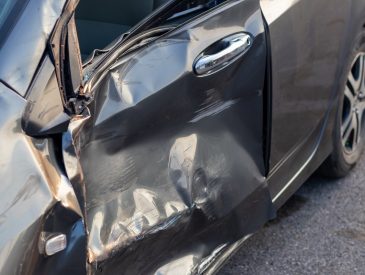
The appraisal process starts outside, and the first thing a trained eye evaluates is panel consistency. Uneven gaps between doors, hood, or trunk — even millimeter-level misalignment — are immediate signals of prior collision repair. Dealers pull vehicle history reports as a matter of course, but they also look for physical evidence that contradicts a clean report. Repainted panels that don’t quite match adjacent ones under natural light, or texture differences between body sections, tell an experienced appraiser that work was done and possibly not disclosed.
What catches many sellers off guard is how aggressively modified vehicles are penalized. Aftermarket wheels, lowered suspension, tinted windows beyond legal limits, or engine modifications can reduce an offer substantially — not because dealers dislike modifications, but because they expand the pool of buyers for a stock vehicle and narrow it for a modified one. A seller who spent $3,000 on aftermarket upgrades typically recovers none of that investment at trade-in. Returning a vehicle closer to factory spec before appraisal, where practical, is worth considering:
- Reinstall OEM wheels if the originals are stored — dealers will note aftermarket fitments and adjust accordingly
- Remove aftermarket tint that exceeds state legal limits, since compliance concerns affect resale directly
- Retain all OEM parts that were swapped out, as having them available shifts the conversation
The Mechanical and Electronic Factors That Don’t Announce Themselves
A vehicle can drive well and still carry hidden mechanical penalties. Worn brake rotors, tires with less than 4/32 of tread depth, or a battery that tests below 70% capacity are all items that show up on a dealer’s reconditioning estimate and come directly off your offer. Dealers calculate what they’ll need to spend to put the vehicle into retail-ready condition, and that estimate tends to run higher than an independent shop would charge.
Electronic faults are increasingly significant. A stored diagnostic trouble code — even one that doesn’t trigger the check engine light — can flag during the appraisal scan. Transmission adaptation issues, HVAC blend door faults, or infotainment system errors that a driver has simply lived with for months are reconditioning line items to an appraiser.
Advanced driver-assistance systems introduce another layer. Windshield replacements, sensor replacements, or front-end repairs that weren’t followed by proper adas calibration can leave safety systems misaligned in ways a driver won’t feel but a scanner will detect, and dealers know these corrections are expensive.
- Have a pre-appraisal OBD-II scan performed at an independent shop — a $20-40 scan can surface codes worth addressing before they reduce your offer
- Replace cabin air filters and engine air filters before appraisal if they’re visibly degraded, since these appear on reconditioning checklists
- Check tire tread depth with a quarter — if Washington’s head is fully visible in any groove, expect a deduction of at least $400-600 per axle in the reconditioning estimate

How Market Timing and Regional Demand Shape Your Number
A vehicle’s condition is only half the equation. Wholesale demand shifts constantly, and a trade-in offer reflects what a dealer believes they can recover at auction or on their lot within 45 to 60 days. A full-size truck traded in during a period of high fuel prices may appraise well below its typical value — not because anything is wrong with it, but because regional retail demand has softened.
Seasonal patterns have real effects. Convertibles and rear-wheel-drive sports cars typically appraise higher in spring than in November. All-wheel-drive SUVs often hold stronger values heading into winter. Sellers who have flexibility in timing can capture meaningful differences — in some vehicle segments, waiting 60 to 90 days can shift an offer by $500 to $1,500.
The decision of where to get an offer also matters significantly. Franchised dealers have different incentives than independent used-car lots:
- A franchised dealer who sells the same brand as your trade-in may retain it for certified pre-owned inventory, which supports a stronger offer
- An independent lot prices purely for wholesale recovery or retail margins, which usually means a lower starting point
- Third-party appraisal services can establish a baseline before any dealership visit, giving sellers a number to test against rather than accepting the first offer without context
Documentation Gaps That Cost More Than Expected
Missing or incomplete documentation affects trade-in offers in ways that feel disproportionate to the actual problem. No second key fob? That’s a $200-400 deduction at minimum, depending on the vehicle, because key programming at the dealer level is expensive. Missing owner’s manuals are a smaller penalty, but they still signal to an appraiser that the vehicle may not have been carefully maintained.
Service records carry more weight than most owners expect. A vehicle without documented oil changes, even if the engine is in good health, invites an appraiser to assume the worst. Conversely, a stack of dealer service records — particularly for timing belt replacements, transmission services, or major repairs — can meaningfully support a higher number because it reduces the appraiser’s perceived risk.
Title issues present the largest documentation risk. A lien that isn’t yet cleared, a title held in a trust, or a rebuilt title (even from a minor claim years ago) can all complicate or reduce an offer significantly. Rebuilt titles, in particular, can cut trade-in value by 20% to 40% compared to a clean-title equivalent.
- Locate both key fobs and all remotes at least two weeks before appraisal — replacement programming before trade-in is almost always cheaper than the deduction
- Compile service records into a single folder organized by date, including independent shop receipts alongside dealer records
- Verify title status through your state DMV’s online lookup before approaching any dealer, especially if the vehicle was financed within the last three years
Getting an Accurate Picture Before the Negotiation Starts
Arriving at an appraisal without a baseline puts sellers in a reactive position. The single most effective preparation step is obtaining two to three independent valuations — through third-party services, competing dealers, or both — before committing to any conversation. Those numbers won’t be final offers, but they establish a defensible range that changes the dynamic of any negotiation.
Address reconditioning items selectively. Not every repair pays off before a trade-in, but high-visibility issues — a cracked windshield, a dead battery, a known fault code — often do, because dealers price reconditioning at retail markup, not cost. A $180 battery replacement at an independent shop might prevent a $350 deduction. Run the math on each item before deciding.