 Auto Trader California
A sudden mechanical failure or vehicular impact on a busy highway instantly disrupts a driver’s schedule. The initial moments following a roadside emergency are often defined by tension, confusion, and safety concerns. Drivers must quickly shift from navigating traffic to securing their personal safety and assessing vehicle damage. Whether a car suffers a blown tire, a complete electrical shutdown, or structural impact from a collision, having a structured recovery plan turns a chaotic disaster into an organized repair process.
Modern vehicles rely on intricate electronic networks, specialized drivetrains, and complex safety features. When something fails on the road, attempting a quick roadside fix is rarely feasible or safe. Immediate assistance requires a reliable professional response to remove the vehicle from hazardous roadside conditions. Partnering with a professional towing service ensures that the automobile is safely transported from the shoulder to a qualified repair facility without incurring secondary damage during transit.
Vehicle recovery involves far more than simply moving a damaged car from point A to point B. It represents the beginning of an integrated restoration workflow. From emergency logistics to specialized technical repairs, comprehensive automotive services guide vehicle owners through every stage of structural, mechanical, and cosmetic recovery. Understanding how this process unfolds gives drivers peace of mind when facing unexpected automotive trouble.
Phase 1 – Roadside Triage and Transport Logistics
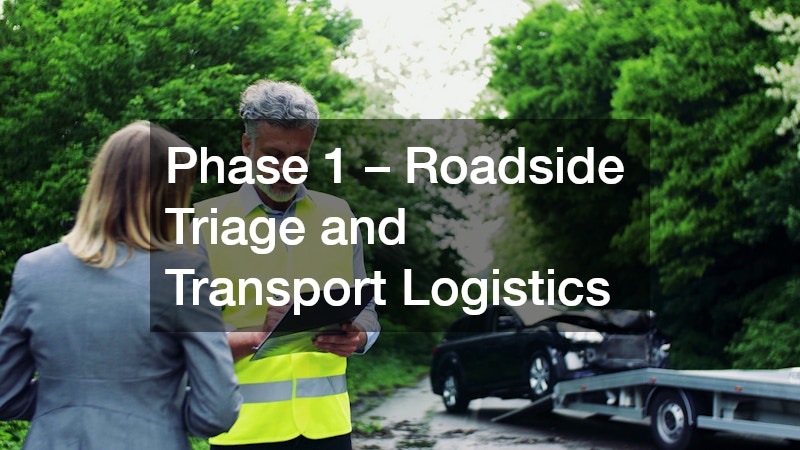
When a breakdown or collision occurs, the immediate priority is always personal safety. Drivers should activate emergency hazard lights, pull off the active roadway if possible, and remain inside the vehicle if traffic conditions present a threat. Once safe, contacting emergency personnel and dispatching transport assistance becomes the next critical step. Dispatchers assess the situation based on location, vehicle size, and the severity of mechanical or structural disablement.
Flatbed transports are generally preferred for all-wheel-drive vehicles, luxury cars, and automobiles with severe wheel or suspension damage. Traditional hook-and-chain methods can cause severe damage to modern bumpers, electronic sensors, and transfer cases. Selecting an experienced provider with a flatbed towing service protects the vehicle’s structural integrity during loading and highway transport. Operators utilize specialized tie-down procedures to secure the wheels without placing stress on sensitive suspension components.
Upon arrival at the repair facility, operators offload the vehicle into a secure intake bay. Detailed documentation begins immediately, capturing the physical condition of the car, fluid leak patterns, and any visible exterior damage. Before technicians elevate the chassis on an auto lift for undercarriage inspections, this initial handover sets the stage for comprehensive diagnostic evaluations, ensuring that secondary issues created during the incident are fully cataloged before technicians begin disassembly work.
Phase 2 – Facility Intake and In-Depth Diagnostics
Once a vehicle arrives at the service center, diagnostic procedures begin in earnest. Modern vehicle recovery requires a systematic approach to uncover both obvious and hidden damage. Collision impacts can misalign structural frames, crack internal housings, or sever delicate wiring harnesses that run along the undercarriage. Likewise, mechanical breakdowns often involve hidden component stress that extends beyond the primary point of failure.
Accurate diagnosis relies heavily on the expertise of certified auto mechanics who combine computer diagnostic scanning with hands-on mechanical inspection. Diagnostic tools interface with the vehicle’s electronic control modules to extract diagnostic trouble codes, monitor sensor outputs, and test electronic actuators. By pairing computerized telemetry with physical undercarriage inspections, repair professionals create an accurate repair estimate and action plan, ensuring every compromised system is identified before repairs begin.
Underhood evaluations often reveal hidden damage caused by heat stress or sudden physical impact. Identifying whether a component needs routine adjustment or a major car engine repair dictates the overall trajectory of the restoration project. Technicians systematically inspect cooling lines, drive belts, and ignition systems for hairline fractures or thermal distortion. Early detection prevents secondary mechanical issues from going unnoticed during major rebuilds, establishing a solid foundation for the entire mechanical overhaul.
Phase 3 – Core Mechanical and Powertrain Diagnostics
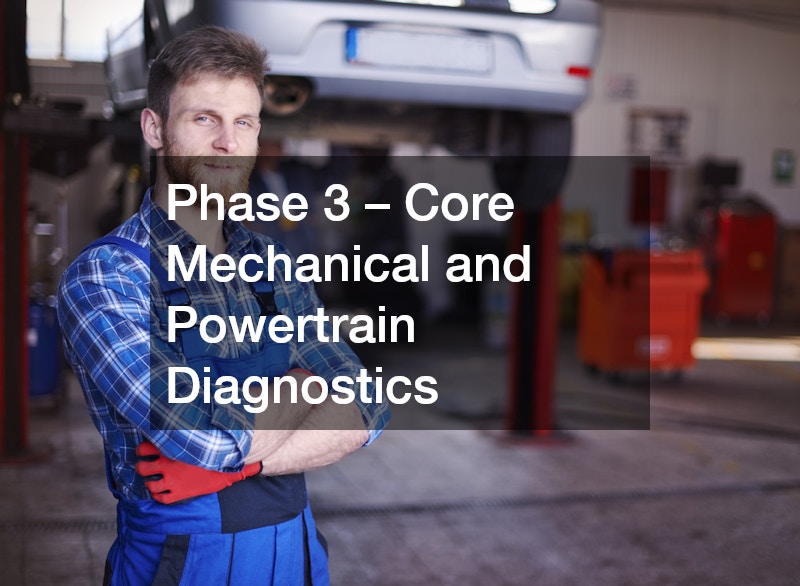
Severe roadside breakdowns frequently stem from thermal overheating, timing belt failures, or severe mechanical failure within the engine or drivetrain. Similarly, front-end collisions can push radiators into engine blocks, destroy accessory belt drives, or crack intake manifolds. Rebuilding the mechanical heart of a vehicle demands precise mechanical tolerances, specialized tools, and extensive technical patience from the dedicated repair team.
During initial teardown, technicians evaluate fluid containment, vacuum seals, and structural clearances across all mechanical systems. Hydraulic braking systems, ABS sensors, brake lines, and calipers often suffer severe damage during high-impact stops or violent collisions. Performing necessary brake repairs ensures that stopping power is fully restored before road testing begins. Technicians systematically replace kinked brake lines, resurface or replace heat-damaged brake rotors, rebuild sticking calipers, and flush hydraulic lines to remove trapped air or contamination.
Simultaneously, mechanical teams assess the state of the drivetrain and gearboxes. Impact force can shatter gear housings or misalign internal clutches, requiring intricate transmission repairs to restore proper power transfer. Fluid analysis helps pinpoint internal friction wear, thermal degradation, and metal debris, ensuring that subtle internal damage is corrected long before the vehicle returns to normal roadway service or daily commuting duties.
Phase 4 – Major Powertrain Restorations and Engine Rebuilds
A vehicle’s powertrain converts raw engine power into rotational force that drives the wheels. During severe breakdowns or high-speed collisions, internal transmission gears, torque converters, transfer cases, and driveshafts experience extreme mechanical stress. Fluid leaks caused by cracked transmission pans can lead to rapid overheating and internal clutch slippage, rendering the vehicle immobile on the road.
When dealing with severe powertrain disruption, executing a targeted car engine repair involves addressing fluid containment, valve timing, and cylinder compression. Internal engine components such as pistons, valves, camshafts, and cylinder heads require exact tolerances to function correctly. If an impact or thermal event damaged critical internal components, technicians systematically teardown, clean, inspect, and replace affected parts using manufacturer-approved components. Pressure testing cylinder blocks and checking head surfaces for warpage prevents future gasket failures or compression loss.
Powertrain repair must seamlessly integrate with broader mechanical recovery efforts. While conducting comprehensive transmission repairs, technicians carefully evaluate the connection points between the engine flywheel, bell housing, and transmission input shaft. Improper alignment between these major assemblies creates severe vibrations that can destroy seals, damage bearings, and cause premature drivetrain failure. Aligning the powertrain correctly guarantees smooth gear transitions and optimal fuel efficiency once the vehicle returns to active driving conditions.
Phase 5 – Precision Alignment and Safety Systems Tuning
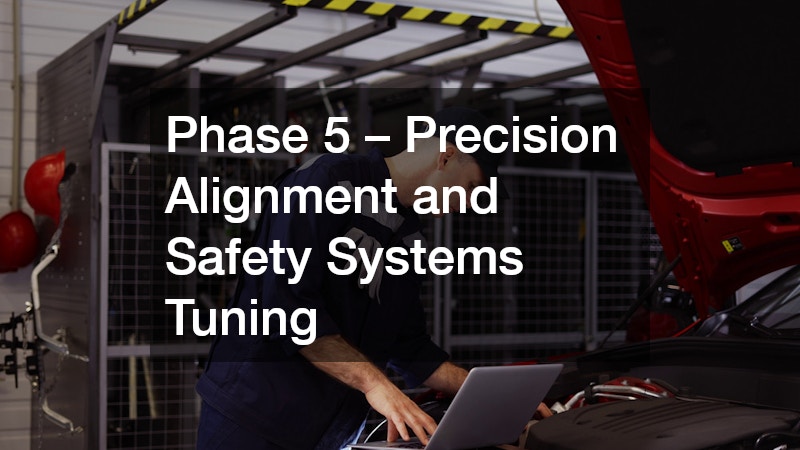
Mechanical repairs are only as effective as the chassis supporting them. Unseen structural shifts or bent suspension arms alter wheel geometry, causing uneven tire wear, pulling, and compromised highway handling. Advanced laser alignment systems allow technicians to measure chassis dimensions down to the millimeter, comparing measurements directly against factory engineering specifications.
Skilled auto mechanics use hydraulic frame straighteners and precision measuring equipment to pull structural components back into exact specification. Steering knuckles, control arms, tie rods, and strut assemblies are checked for hairline fractures and subtle deformation. Replacing compromised suspension hardware guarantees that the vehicle tracks straight and responds predictably during evasive steering maneuvers. Proper geometry prevents excessive stress on newly installed mechanical components.
Following chassis alignment, technicians turn their focus back to fine-tuning the braking system and electronic driver assistance features. Modern safety systems rely on sensor data integrated with comprehensive brake repairs, such as wheel speed sensors and automatic emergency braking modules. Technicians recalibrate anti-lock braking modules, re-zero steering angle sensors, and road-test hydraulic performance under controlled conditions. This rigorous testing phase confirms that all safety systems operate synchronously under sudden stopping scenarios.
Phase 6 – Frame Realignment and Exterior Body Refinishing
Once mechanical and structural integrity is re-established, attention turns to exterior bodywork and paint restoration. Collisions leave behind dented panels, creased metal, scuffed clear coats, and compromised rust protection. Body technicians strip away damaged body panels, pull minor sheet metal dents, and apply specialized fillers to recreate the vehicle’s original body contours and aerodynamic profiles.
To access lower rocker panels and bottom body seams during detailed body repairs, technicians frequently raise the vehicle on an auto lift. This provides comfortable ergonomics and clear visual access, ensuring that panel gaps match factory tolerances along every seam. Panel fitting requires meticulous adjustments to hood latches, door hinges, and trunk alignment to keep wind noise and water leaks out of the passenger cabin.
After body filler sanding and primer application, the vehicle enters a climate-controlled spray booth. Modern waterborne paint systems match factory colors using digital spectrophotometers. Multiple coats of base paint and clear coat are applied, cured under infrared heating lamps, and prepped for finishing. Before applying final protective sealants, a preliminary car wash removes sanding dust, compound residue, and overspray from external surfaces, preparing the paintwork for delicate surface treatment.
Phase 7 – Paint Restoration and Protective Film Application
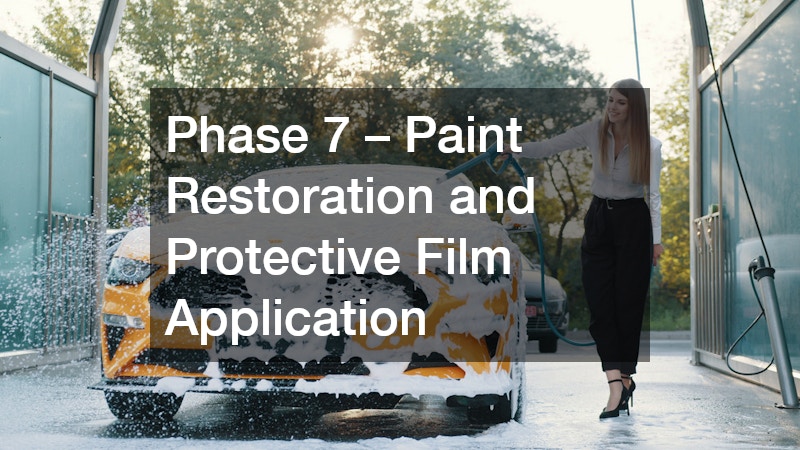
Freshly painted panels require careful curation and protection to preserve their flawless finish against harsh road hazards. Fresh paint needs adequate curing time before being exposed to environmental elements like gravel, road salt, insect acids, and ultraviolet radiation. Detailers perform multi-stage paint correction using rotary polishers and microscopic abrasives to level clear coat imperfections, polish away fine haze, and remove unwanted orange peel texture.
To safeguard delicate forward-facing body panels from future stone chips and scratches, specialists install paint protection film. This durable thermoplastic polyurethane layer acts as an invisible armor over the hood, front bumper, fenders, and side mirrors. Advanced film formulations feature self-healing properties that eliminate swirl marks when exposed to ambient warmth or sunlight. Precision computer-cut templates ensure exact coverage around badges, sensors, and complex body contours without risking blade damage to underlying paint.
Investing in high-grade protective coatings is an essential final phase offered by comprehensive automotive services. By layering ceramic coatings over paint surfaces and protective films over high-impact zones, vehicle owners extend the longevity of their exterior finish. These protective treatments make future maintenance effortless while preserving structural and aesthetic resale value for years down the road.
Phase 8 – Interior Reconditioning and Deep Detailing
Road accidents and mechanical breakdowns frequently take a heavy toll on a vehicle’s interior cabin. Emergency responders, tow operators, and mechanics track grime, grease, and glass fragments into the cabin during recovery and repair operations. Furthermore, deployed airbags leave chemical powders across dashboards, steering wheels, and headliners that require specialized cleaning methods before the vehicle can be safely driven again.
Complete interior restoration demands a professional auto detailing service that addresses deep fabrics, leather surfaces, and delicate trim pieces. Specialists utilize commercial steam extractors to lift embedded dirt from carpets, seats, and floor mats. High-efficiency particulate air vacuums remove fine particulate matter, while specialized leather conditioners restore moisture and suppleness to dried or scuffed leather upholstery. Odor elimination treatments neutralize smoke, moisture, or chemical smells lingering in HVAC ductwork.
While deep interior reconditioning is underway, technicians perform a final exterior car wash to flush out lingering polishing oils and fine dust particles from door jambs, fuel doors, and trim channels. Combining deep interior extraction with meticulous exterior washing restores that immaculate, factory-fresh atmosphere inside the cabin, elevating the vehicle from simply repaired to beautifully restored.
Phase 9 – Final Quality Assurance and Showroom Delivery
The final phase of vehicle recovery is quality assurance and final handover. Before keys are handed back to the owner, the vehicle undergoes rigorous multi-point road testing and detailed aesthetic inspection. Master technicians conduct extended test drives over varied road surfaces to verify engine performance, transmission shifting smoothness, alignment stability, and braking response under real-world driving conditions.
Aesthetic inspectors examine the body panels under high-intensity inspection lights to check clear coat clarity and verify seamless alignment along the edges of the freshly installed paint protection film. Any minor imperfections, dust nibs, or edge lifting are corrected immediately by specialized technicians. The interior receives a final thorough touch-up under the direct supervision of the auto detailing service lead, ensuring every surface, gauge cluster, door panel, and window is completely streak-free and spotless.
When the owner arrives for pickup, the service advisor conducts a comprehensive walkthrough around the vehicle. They present diagnostic reports, alignment certificates, and complete warranty documentation covering all structural repairs, mechanical overhauls, and protective coatings. Stepping back into a vehicle that looks, smells, and drives like it just rolled off the showroom floor transforms a traumatic roadside experience into a story of complete restoration and renewed confidence.