
 Auto Trader California
The moments immediately following a collision are disorienting, yet the decisions made on the roadway establish the foundation for vehicle recovery. Drivers must prioritize personal safety before inspecting physical damage. If the automobile remains operational, steering it onto a wide shoulder or into an adjacent parking lot clears traffic lanes and minimizes secondary collision risks. Activating hazard flashers alerts approaching traffic, while warning triangles give motorists ample reaction time during dark hours. Drivers should check passengers for injuries and notify emergency responders promptly.
Once safety is assured, vehicle operators should document the collision environment thoroughly. High-resolution photographs capturing broad scene angles, skid marks, traffic signals, and surface debris provide objective evidence for adjusters. Drivers should photograph vehicle damage from multiple perspectives, focusing on panel gaps, cracked light housings, and wheel angles. Exchanging contact information, license numbers, and insurance policies with all involved parties must happen calmly without debating fault.
Attempting to drive away from an accident scene often introduces severe mechanical damage. Bent steering tie rods or severed brake lines create catastrophic safety hazards. Vehicle owners should bypass informal towing offers from passing wreckers and instead summon established roadside assistance services to transport the vehicle safely. Professional flatbed operators secure vehicles by chassis tie-down points rather than bent suspension arms, preventing secondary frame distortion.
Initial Triage and Computerized Scanning at Modern Facilities
Arriving at an assessment center marks the transition from accident management to systematic mechanical triage. Modern automobiles rely heavily on interconnected computer modules, ultrasonic parking sensors, radar units, and forward-facing cameras embedded behind bumper covers. A collision that leaves only superficial scuffs on an exterior plastic fascia can easily dislodge delicate bracket mounts or sever sensitive wire harnesses. For this reason, reputable mechanic shops initiate the intake process with comprehensive pre-repair computerized diagnostic scans. These digital assessments interrogate every onboard controller, pinpointing diagnostic trouble codes that explain hidden electrical faults or sensor communication drops.
Beyond digital diagnostics, technicians conduct physical teardowns to inspect underlying chassis subframes and support brackets. Removing damaged outer skins allows service advisors to identify hairline fractures in aluminum suspension cradles, cracked engine mounts, and bent steering knuckles. Visual checks alone cannot detect subtle structural deflections that compromise vehicle tracking and tire wear. Technicians utilize digital calipers, tram gauges, and three-dimensional measuring systems to verify that suspension mounting points match manufacturer specifications.
Thorough documentation during this initial triage phase prevents unexpected insurance supplement claims later in the repair schedule. Service estimators catalog damaged hardware, photograph hidden structural defects, and record all diagnostic trouble codes into a central management system. Understanding whether component damage stems from direct impact, secondary stress propagation, or pre-existing wear establishes realistic repair timelines and avoids costly billing disputes.
Structural Realignment and Frame Reconstruction
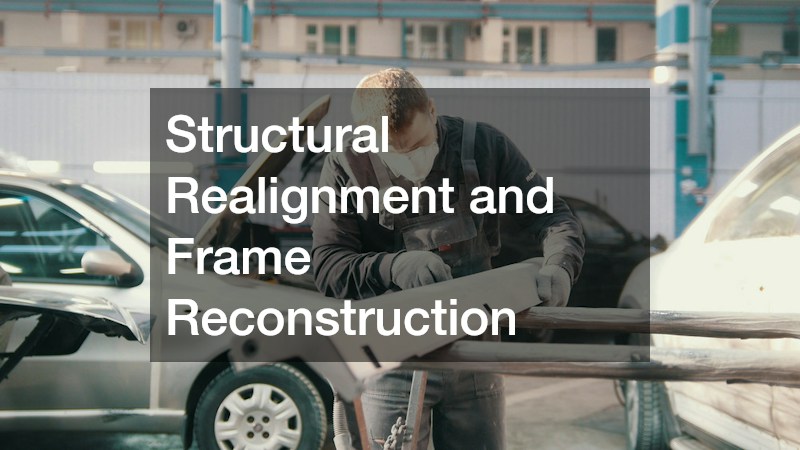
The structural integrity of a passenger automobile depends upon carefully engineered crumple zones designed to absorb and redirect collision energy away from the occupant cabin. When impact energy exceeds the elastic limits of exterior sheet metal, forces transfer directly into unibody rails, pillar reinforcements, and floor pans. Restoring these high-strength steel and aluminum structures requires specialized auto body repair protocols governed by strict original equipment manufacturer guidelines. Technicians cannot simply hammer structural members back into shape; heating high-strength metals improperly alters their metallurgical properties, leaving the vehicle vulnerable to structural collapse in future accidents.
Modern structural restoration relies on computerized frame benches equipped with hydraulic pulling towers and electro-optical measuring arrays. Technicians secure the damaged chassis to rigid anchoring clamps, applying calibrated multi-directional tension to reverse the exact vectors of impact forces. Ultrasonic sensors monitor reference points across three spatial planes, comparing live measurements against factory blueprints in real time. Once frame rails and upper body pillars realign within millimeter tolerances, damaged structural segments that cannot be safely pulled are replaced using factory-approved sectioning procedures.
Joining replacement structural panels demands sophisticated welding technologies. Certified technicians utilize squeeze-type resistance spot welders and silicon-bronze pulse welders to match factory welds exactly. Applying cavity waxes inside hollow frame rails shields new structural joints from moisture intrusion, guaranteeing that passive restraint systems and airbag deployment triggers perform reliably.
Surface Preservation and Paintless Dent Techniques
Not every impact inflicts damage deep enough to compromise a vehicle’s structural skeleton or break its exterior clear coat. In low-speed parking lot scrapes, shopping cart impacts, or glancing fender taps, underlying sheet metal stretches without cracking the flexible automotive paint finish. In these distinct scenarios, skilled metal artisans utilize paintless dent repairs to massage displaced panels back into their original factory contours. Bypassing unnecessary body filler, sanding steps, and paint resprays saves significant turnaround time while preserving the irreplaceable factory corrosion-resistant primer layer.
Technicians execute these non-invasive metal repairs by gaining access behind the damaged panel using access holes, window channels, or detached interior trim cards. Utilizing high-intensity LED light boards, technicians project parallel reflection lines across the panel face. By reading distortions in these reflected light patterns, craftsmen guide specialized metal picks, curved rods, and blending hammers against the backside of the dent with microscopic precision. Every gentle manipulation relieves mechanical stress within the stamped metal, gradually returning high and low spots to a uniform, flat plane.
For double-walled panels or areas with zero backside clearance, technicians employ specialized glue-pulling systems. Applying proprietary thermoplastic adhesives and nylon tabs to the dent exterior allows pullers to exert controlled tension outward using slide hammers. Once the metal rises to proper level, isopropyl release agents dissolve the adhesive cleanly without marring the clear coat. Preserving original paintwork through this method eliminates the risk of future paint peeling or color shading discrepancies.
Wheel Restoration and Suspension Geometry Alignment
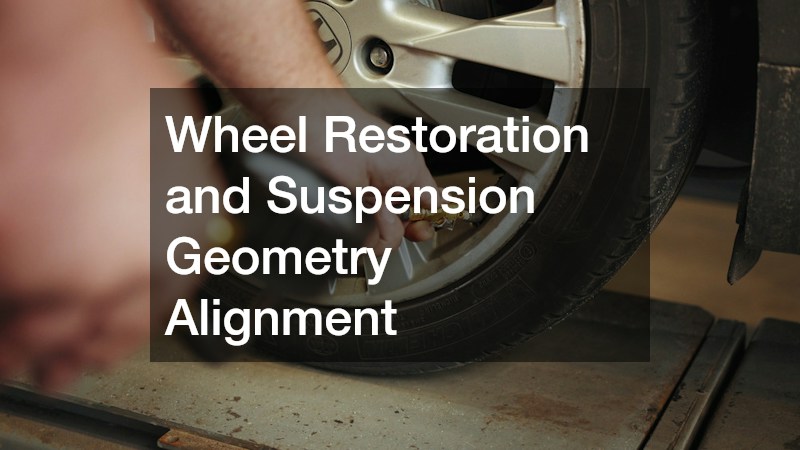
Road hazards and angular collisions rarely spare a vehicle’s running gear. When a car spins across a curb, takes a direct hit to an axle, or collides with heavy roadway debris, the impact force transfers immediately through the tire and wheel assembly. Minor cosmetic scrapes along an alloy wheel lip may conceal far more dangerous structural issues, including hairline fractures across inner barrels, lateral runout, or radial bends that prevent tires from seating securely. Addressing these wheel imperfections through specialized rim repairs restores rotational balance, eliminates high-speed steering wheel vibrations, and prevents slow air leaks that could lead to unexpected highway blowouts.
Professional wheel reconditioning requires specialized equipment beyond basic tire mounting machines. Wheel technicians mount compromised alloy units onto hydraulic straightening systems equipped with sensitive digital dial indicators. Technicians heat specific sections of the wheel using controlled infrared heaters, relieving internal stress before hydraulic pistons push warped barrels back into concentric roundness. For deep gouges and curb rash, master welders add compatible aluminum alloy filler material via tungsten inert gas welding, followed by lathe machining that cuts the wheel face back to its precise factory diamond-turned finish.
Cabin Climate Control and Thermal System Rehabilitation
Front-end collisions represent the most frequent accident category on modern highways, and the components mounted directly behind the front bumper grille bear the initial brunt of deceleration forces. This forward zone houses the vehicle’s cooling package, comprising the engine radiator, transmission oil cooler, auxiliary fans, and air conditioning condenser. Even a low-speed impact that leaves the plastic bumper cover intact can push the radiator support backward, crushing delicate condenser fins and snapping high-pressure refrigerant fittings. When refrigerant escapes, the vehicle requires immediate auto AC repair to restore interior cabin comfort and prevent secondary component destruction.
Automotive climate control systems are sensitive closed loops that circulate high-pressure refrigerant alongside specialized synthetic lubricating oils. When an impact punctures an air conditioning condenser or cracks an aluminum discharge line, outside air and atmospheric humidity rush into the depressurized system. Moisture mixes with residual lubricating oil to form corrosive acids that rapidly destroy the polished internal cylinders of the air conditioning compressor. Technicians must flush the entire refrigerant circuit with solvent cleaners, replace the desiccant receiver-drier bag, and install a brand-new aluminum condenser before pulling a deep vacuum on the system.
Powertrain Verification and Mechanical Drive System Rebuilding
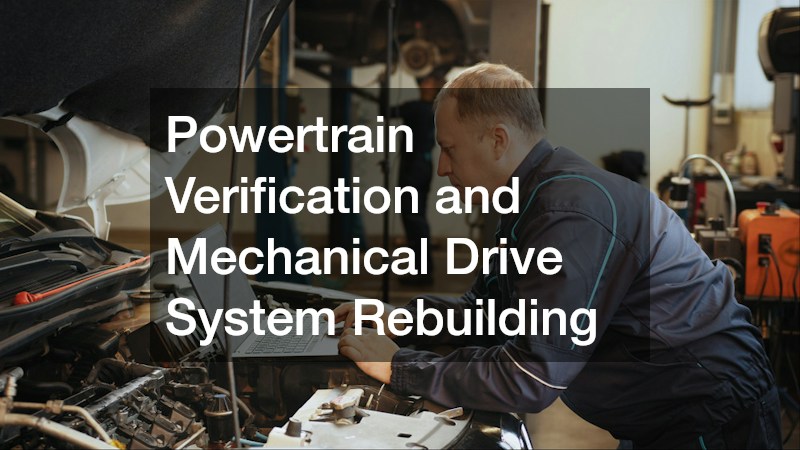
A vehicle emerging from an accident must deliver exceptional reliability under all driving conditions. While cosmetic panels capture the owner’s immediate attention, the mechanical drivetrain operating underneath requires exhaustive validation before the car returns to public roads. Shock loads transmitted through axle shafts can dislodge internal constant-velocity joints, crack aluminum transmission housings, or stress hydraulic motor mounts until their dampening fluid leaks out. Entrusting the final mechanical powertrain inspection to a seasoned local auto mechanic ensures that every critical drive component receives the rigorous hands-on scrutiny it warrants.
A master technician begins this mechanical evaluation by hoisting the vehicle onto a heavy-duty two-post lift to inspect driveline balance. The technician checks driveshafts for rotational runout, inspects differential seals for microscopic weeping, and examines exhaust systems for crushed catalytic converters or broken rubber hangers. Engine accessory drive belts, alternator pulleys, and water pump bearings must be spun and tested for bearing noise or physical wobble caused by front-end intrusion. Any crushed vacuum lines, chafed electrical wiring harnesses, or bent power steering fluid tubes must be repaired using factory-approved routing clips.
Component Sourcing and Material Quality Assurance
The durability and safety of an accident-repaired automobile rely fundamentally upon the grade and provenance of replacement parts selected during the restoration build. Collision repair facilities regularly navigate choices between original equipment manufacturer components, certified aftermarket equivalents, and recycled original assemblies. While insurance adjusters often attempt to substitute substandard non-certified panels to reduce claim payouts, informed repair planners prioritize certified hardware. Establishing strong trade partnerships with trusted distributors of local auto parts provides technicians with rapid access to high-grade replacement sheet metal, radiators, steering racks, and exterior lighting units without prolonged shipping delays.
Choosing certified components matters enormously when replacing collision-damaged fenders, hoods, and structural supports. Premium replacement body panels feature hot-dipped galvanized steel coatings that resist rust formation and match the metallurgical stamping rigidity of the original automobile. Ill-fitting counterfeit panels rarely align with adjacent body lines, resulting in uneven panel gaps, persistent wind whistles at highway speeds, and water leaks around headlight gaskets. Furthermore, non-certified headlight assemblies frequently exhibit poor optical beam patterns, scattering glare into oncoming traffic while failing to illuminate nighttime driving lanes properly.
Paint Formulation, Clear Coat Application, and Facility Finishing
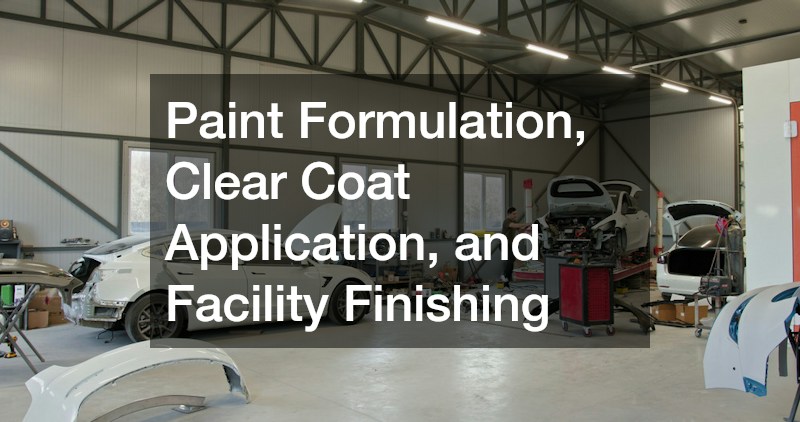
Transforming repaired structural panels into an immaculate, factory-fresh exterior represents one of the most demanding stages of the collision rehabilitation journey. Automotive paint finishes are delicate, multi-tiered coatings comprising zinc phosphate anti-corrosion layers, electro-deposition primers, pigmented base coats, and protective acrylic clear coats. Successfully blending a newly installed fender or door panel into adjacent sun-aged factory paintwork requires the controlled environment and technical equipment found only in an established body shop. Without scientific color matching and climate-controlled curing booths, freshly painted panels will display glaring shade variations under direct sunlight.
The painting process begins inside computerized paint mixing laboratories. Technicians locate the manufacturer’s paint code inside the vehicle door jamb and enter the alphanumeric string into the computerized spectrophotometer software. Because ultraviolet sunlight and environmental oxidation alter vehicle paint over time, an optical camera scans the existing paint on adjacent panels to calculate minute formula adjustments. The technician mixes precise quantities of base toners, metallic flakes, and pearl pigments on digital gram scales, testing the spray pattern on test cards until color shade, metallic flop angle, and gloss depth match the existing vehicle finish perfectly.
Detailing Transformations, Reconditioning, and Ownership Upgrades
Reaching the final stage of the post-accident recovery checklist means elevating the automobile beyond mere pre-accident condition toward a true showroom presentation. Once the paint finishes undergo final curing, skilled detailing technicians perform wet sanding with ultra-fine abrasive discs to eliminate any microscopic dust nibs or surface irregularities. Multi-stage rotary polishing with diminishing abrasive compounds cuts away compounding marks, followed by orbital dual-action finishing to produce a mirror-like, swirl-free gloss across every reconstructed panel. The vehicle interior receives equal attention, with technicians extracting dust from cabin air vents, sanitizing upholstery, and conditioning leather surfaces to eliminate collision-related odors.
Many car owners recognize that scheduled repair downtime offers an opportune moment to invest in preventative protection and personalized styling enhancements. Savvy drivers frequently commission specialized vehicle upgrade services before taking delivery of their freshly repaired automobile. Installing clear paint protection film over the freshly painted front bumper, hood, and mirror caps shields vulnerable leading edges from highway stone chips, insect acid, and road grit for years to come. Other owners select high-performance nano-ceramic window tint to block solar heat infiltration, or apply hydrophobic ceramic coatings across all exterior paint and glass surfaces to make weekly washing effortless.
Before turning the ignition key and driving away from the delivery bay, owners should conduct a meticulous walk-around inspection alongside the facility manager. The customer should inspect panel gaps under bright outdoor sunlight, verify that all power windows, locks, and safety cameras operate smoothly, and review lifetime warranty documentation covering paintwork and workmanship. The journey from a jarring collision scene back to pristine showroom beauty requires systematic patience, master craftsmanship, and unwavering attention to technical detail. When guided by a rigorous recovery checklist, restored vehicles deliver unmatched safety, dynamic performance, and aesthetic pride.